
Biofeedback Training
Your body already knows how to calm down. Biofeedback shows you, second by second, when it does, so you can learn to do it on purpose.
André Fleshel, psychotherapist, hypnotherapist, breathwork and somatic practitioner. 25 years of practice in Ukraine and the USA. Used biofeedback with children and teens in Pennsylvania behavioral health programs, and with adults in private practice.
Try a demo session · $49Ask a questionWhat biofeedback is
Small sensors read what your nervous system is doing: heart rate variability, skin conductance, the temperature of your fingers. The computer turns it into a picture or a game. Relax, and a ball rises into the air. Tense up, and it drops.
Nobody tells you how to feel. You try something with your breath, your attention, your muscles, and the screen tells you honestly whether it worked. The body learns fast when the feedback is instant.
Heart rate variability (HRV) shows how flexible your nervous system is: how fast you adapt to stress and how fast you come back. It can be trained. Hand temperature is the simplest signal of all: under stress the hands get cold, when you relax they warm up. Learn to warm your hands, and your stress comes down.
Where it helps
Ask a question · Book a session · Text: +1 (267) 281 4404
Demo session
One hour to see your own nervous system on the screen and feel what it’s like to steer it.
- Talk (10 min). What brings you: stress, sleep, panic, focus, performance.
- Your baseline (10 min). Sensors on your fingers. We see how your body reacts right now.
- Training (30 min). Breathing, attention, imagery, relaxation. You watch the screen respond.
- What next (10 min). An exercise to practice at home, and whether continuing makes sense. No pressure.
In person at our center in Huntingdon Valley, PA, or online. After the demo, regular sessions are $75/hour.
Book the demo · $49Ask a questionExperience
For eight years I worked in clinics and crisis programs in Pennsylvania and used biofeedback with more than forty children and teenagers: ADHD, mood disorders, autism spectrum, trauma, families in crisis. The game format opened doors for kids who didn’t trust a therapist.
Ukrainian military and veterans
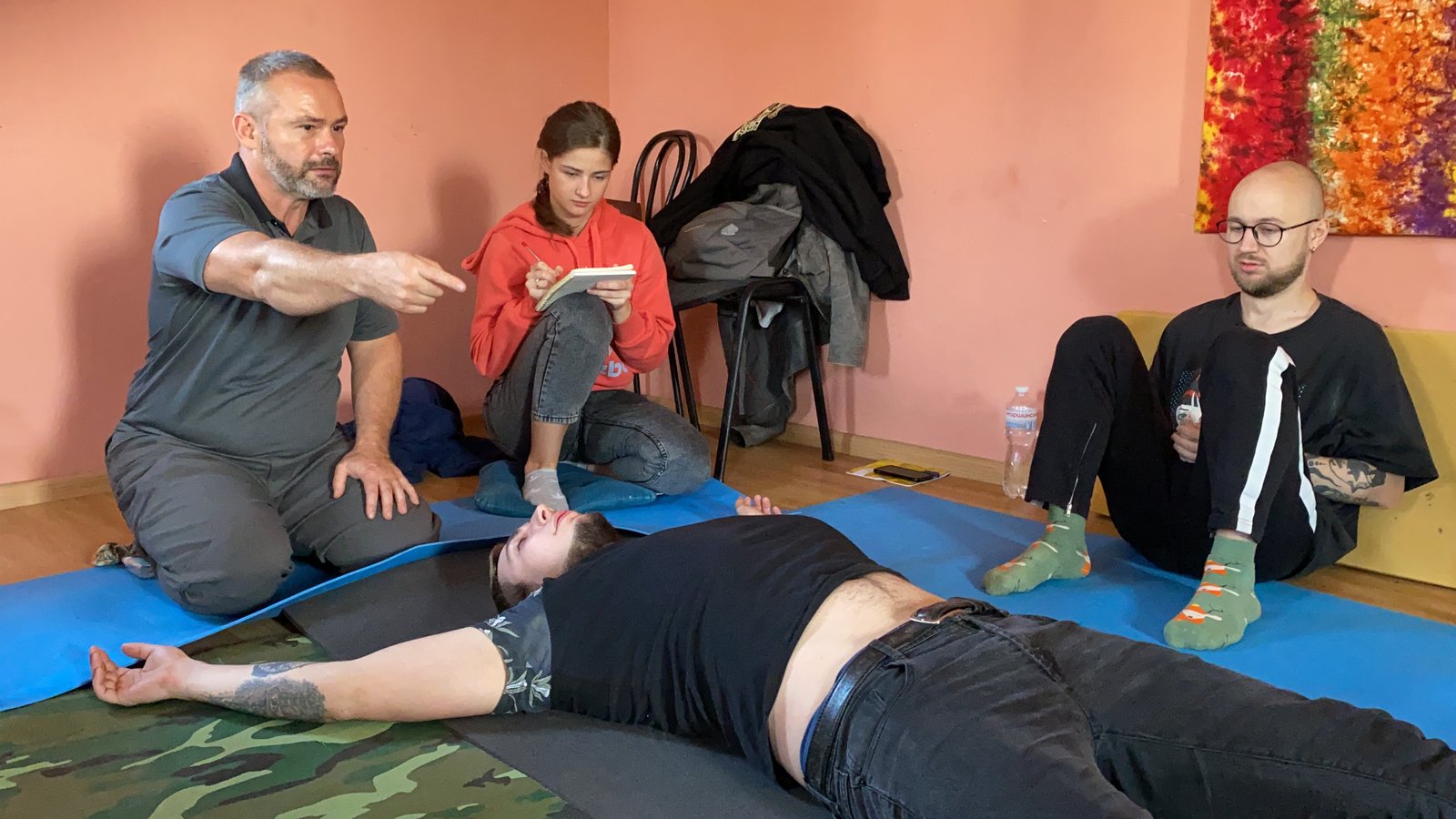
In 2014–2016, through the Officers’ League in Ukraine, I trained Ukrainian Army psychologists and medical staff in crisis intervention and trauma support, and worked with soldiers and veterans. Research on Marines and veterans links low HRV with PTSD, and HRV training can raise it. Together with the Officers’ League I wrote a manual on biofeedback and resonance breathing for military professionals.
Video lectures
Recorded in Russian. English subtitles are on.
Other ways to work with me
Biofeedback training is a self-regulation method. It does not replace medical or psychiatric diagnosis and treatment. If you have a heart condition, epilepsy or another serious medical condition, talk to your doctor first.
